Bianca Carter · 7 October 2026
European University Consortia Expand Student Training Programs Using Curated Molecular Interaction Datasets
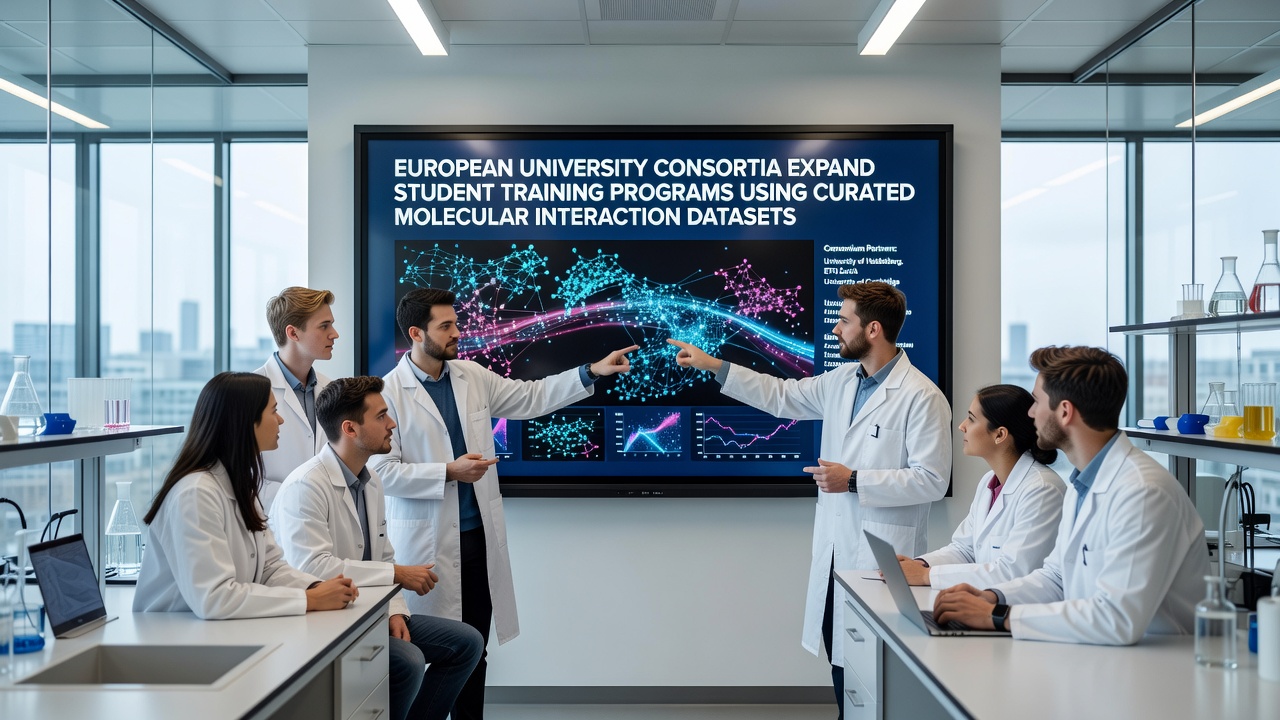
European university consortia have scaled up student training initiatives that rely on curated molecular interaction datasets, and these efforts now reach multiple member states through coordinated academic networks. Researchers at institutions across Germany, France, and the Netherlands coordinate the sharing of protein-ligand binding records, enzyme-substrate profiles, and small-molecule interaction maps that support computational biology coursework. Data from the European Research Council shows that participating programs added more than 1,200 new student slots during the 2025-2026 academic year, with emphasis on hands-on use of validated interaction libraries rather than raw experimental outputs.
Dataset Curation and Standardization Practices
Consortia members apply strict curation pipelines that include cross-validation against public repositories such as the Protein Data Bank and ChEMBL, followed by manual review by domain specialists who flag incomplete entries or inconsistent assay conditions. The resulting collections contain interaction affinities expressed in standardized units, along with metadata that records temperature, pH, and buffer composition. Students therefore train on datasets that reflect experimental reality instead of idealized models, and instructors report fewer discrepancies when learners compare predicted versus measured binding constants.
One consortium operating between the University of Heidelberg and Université Paris-Saclay released a 2025 update that added 45,000 new curated entries focused on kinase-inhibitor pairs. The update also introduced version-controlled release notes that track changes in curation criteria, allowing training modules to remain synchronized across partner universities.
Program Structure and Curriculum Integration
Training modules combine lectures on biophysical principles with laboratory sessions in which students query the curated collections using scripts written in Python or R. Participants learn to filter datasets by molecular weight, ligand efficiency, and interaction type before building simple regression models that predict affinity values. Each module concludes with a benchmark exercise that compares student-generated predictions against withheld test sets drawn from the same curated sources.
Programs now incorporate remote access portals that let students from smaller institutions join virtual clusters maintained by larger partners. This arrangement reduces the need for local high-performance computing hardware while preserving data access controls that comply with institutional ethics agreements. In October 2026 several consortia plan to launch joint webinars that demonstrate how updated datasets alter model performance metrics in real time.
Geographic Reach and Institutional Partnerships
Expansion has moved beyond the original core group of six universities to include newer members in Spain, Sweden, and Austria. The European Molecular Biology Laboratory provides technical support for dataset hosting, while national funding agencies in each country cover local coordination costs. Observers note that this distributed model allows smaller departments to offer advanced computational training without duplicating curation infrastructure.
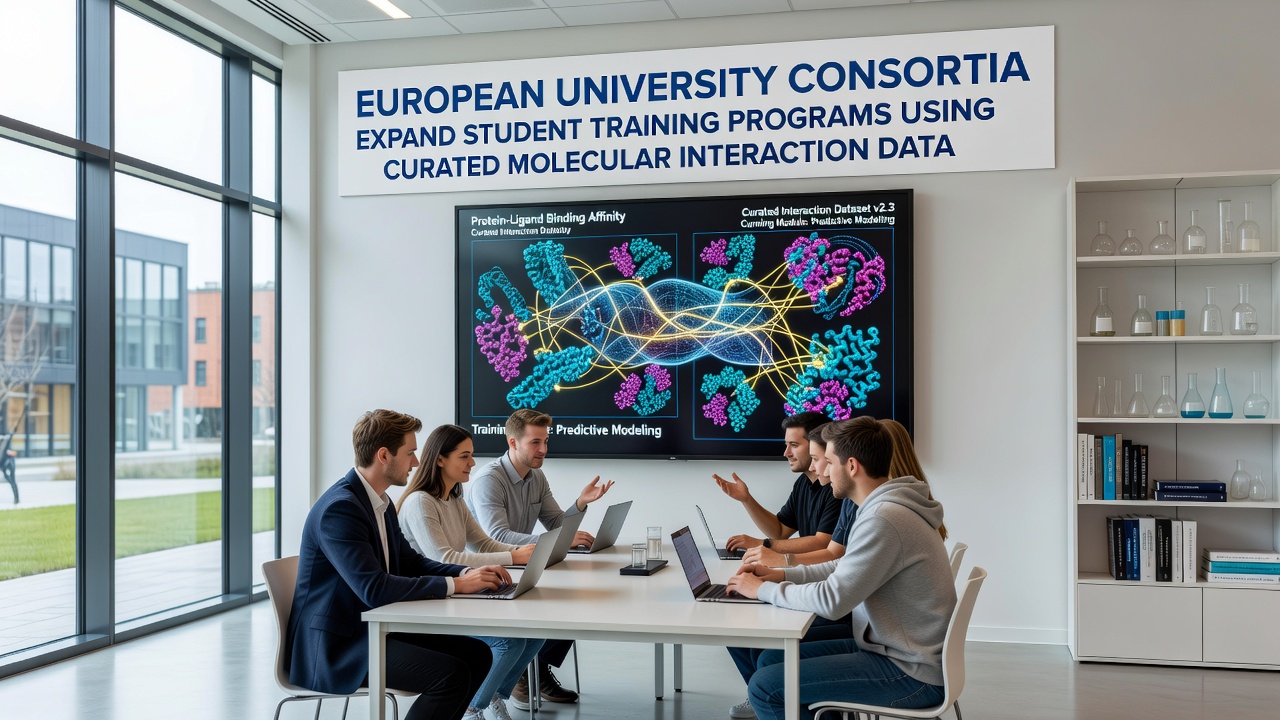
Partnership agreements specify that each member institution contributes at least 10 percent of its curated entries to a shared pool, and usage statistics are published annually. Figures from the 2025 report indicate that the shared pool now exceeds 320,000 unique interaction records, with growth driven primarily by contributions from French and Dutch laboratories specializing in G-protein-coupled receptor ligands.
Student Outcomes and Skill Development
Graduates from these programs have applied their training in subsequent research placements at pharmaceutical companies and academic labs. Placement records show that participants complete independent docking or quantitative structure-activity relationship projects at higher rates than peers who lacked access to curated collections. Instructors attribute the difference to the consistency of the training data, which reduces time spent troubleshooting format errors or reconciling conflicting measurements.
Case studies compiled by the consortia describe students who refined binding prediction algorithms after working with subsets filtered for specific target classes. One group at the University of Groningen identified a previously overlooked interaction pattern in a protease dataset, leading to a follow-up experimental collaboration with a partner laboratory in Vienna.
Future Developments Scheduled for Late 2026
Planning documents released in mid-2026 outline further dataset expansions that will incorporate interaction records involving RNA targets and larger macrocyclic ligands. Consortium leaders have scheduled a joint meeting for October 2026 to finalize metadata standards for these new entries and to coordinate the release of corresponding training exercises. The meeting will also review feedback collected from the previous cohort of students regarding interface usability and dataset completeness.
Conclusion
European university consortia continue to enlarge student training programs that depend on curated molecular interaction datasets. The coordinated approach has produced standardized resources used across multiple countries, supported curriculum integration at both large and small institutions, and generated measurable improvements in student project outcomes. Ongoing updates scheduled through October 2026 will extend coverage to additional molecular classes while maintaining the curation practices that underpin current training activities.