Willa Schmid · 23 September 2026
Polish Bioinformatics Networks Distribute Restricted Molecular Datasets to Train Students in Binding Prediction Techniques
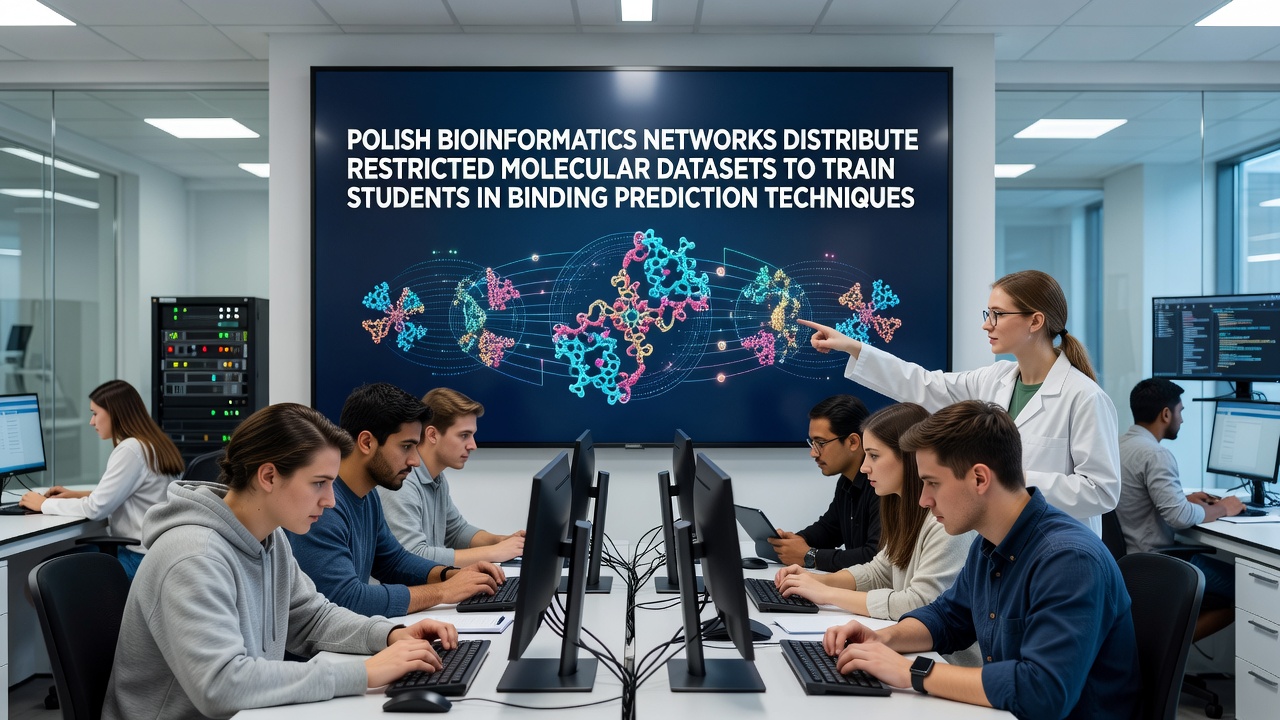
Polish bioinformatics networks have expanded their efforts to share restricted molecular datasets with academic institutions across the country, and these resources focus on protein-ligand interactions that support training in binding prediction techniques. Researchers at multiple universities access curated collections of molecular structures and affinity data that remain limited to verified educational users, while the networks coordinate distribution through secure platforms that track usage and ensure compliance with data access agreements. Data from these collections cover thousands of compound-protein pairs drawn from public repositories and proprietary simulations, and students apply the information in exercises that model binding affinities using established computational methods.
Network Structure and Data Access Protocols
Coordinated groups based in Warsaw, Krakow, and Gdansk maintain the infrastructure that handles dataset requests and verification, and each participating lab contributes updates to the shared repositories on a rolling schedule. Access requires institutional affiliation plus completion of training modules on data ethics and computational reproducibility, so the system filters participants before releasing files that contain detailed atomic coordinates and experimental validation metrics. According to records maintained by the networks, over 1,200 students registered for access during the 2025 academic year, and usage logs show consistent activity in molecular docking workflows and scoring function development.
Dataset Composition and Binding Prediction Applications
The released collections include both experimentally derived structures from the Protein Data Bank and computationally generated poses that reflect common docking challenges, and each entry carries metadata on binding constants measured under standardized conditions. Students practice techniques such as rigid-body docking, flexible side-chain modeling, and consensus scoring, while instructors integrate the datasets into semester-long projects that compare predicted results against held-out experimental benchmarks. One study coordinated through the networks examined how different force fields affect ranking accuracy across a 500-complex subset, and the resulting publication reported measurable improvements in student performance on subsequent blind prediction tasks.
Training Programs and September 2026 Milestones
Workshops scheduled for September 2026 will introduce an expanded set of datasets that emphasize membrane protein targets and allosteric binding sites, and organizers expect several hundred additional participants from partner universities. Sessions combine lectures on binding thermodynamics with hands-on sessions that use the restricted collections to refine machine-learning models for affinity prediction. The programs also cover validation strategies that compare computational outputs to independent assay results, and participants receive feedback on their model performance through automated scoring pipelines maintained by the networks.
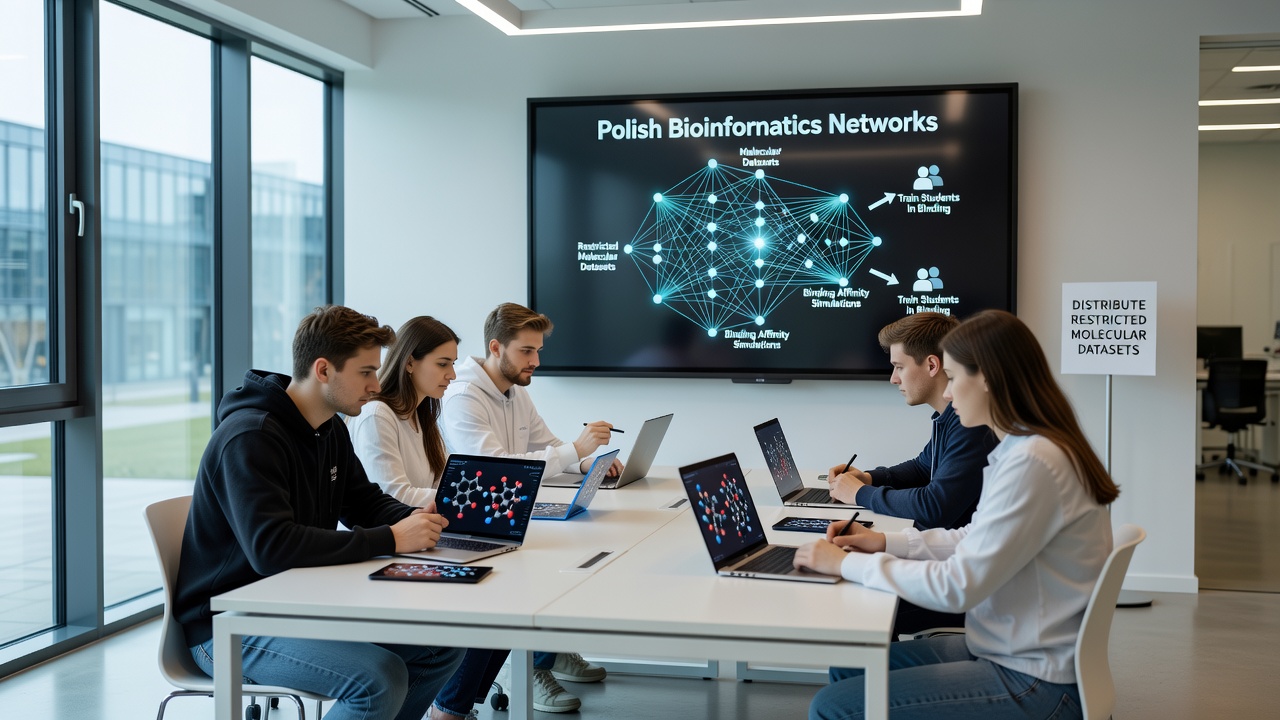
Faculty report that integration of these datasets into existing courses has increased the number of student-led projects submitted to national computational biology competitions, and several teams have advanced to international events using models trained on the restricted resources. External benchmarks published by the National Center for Biotechnology Information indicate that educational cohorts trained on similar curated sets achieve higher precision in retrospective docking challenges than groups relying solely on public data. The Polish networks maintain version control for each release so instructors can reproduce prior assignments and compare longitudinal improvements in student predictions.
Collaborations with International Research Bodies
Partnerships with the European Molecular Biology Laboratory allow the networks to cross-reference their restricted collections against larger European repositories, and these alignments help standardize annotation formats used in student exercises. Joint working groups meet quarterly to review access statistics and update protocols that govern data sharing, and representatives from Polish institutions contribute feedback on how the datasets perform in classroom settings. Such exchanges also support development of new scoring functions tailored to the chemical space represented in the Polish collections, and preliminary results from these efforts appear in conference proceedings from 2025.
Conclusion
Continued expansion of the restricted dataset program depends on sustained institutional support and adherence to access policies that protect sensitive molecular information. The networks plan additional releases timed with academic calendars, and September 2026 stands as a key date for the next major update. Observers note that the structured distribution model supplies students with realistic training materials while preserving the integrity of underlying research data, and similar approaches appear in other European bioinformatics initiatives that balance education needs against data governance requirements.