Willa Schmid · 2 September 2026
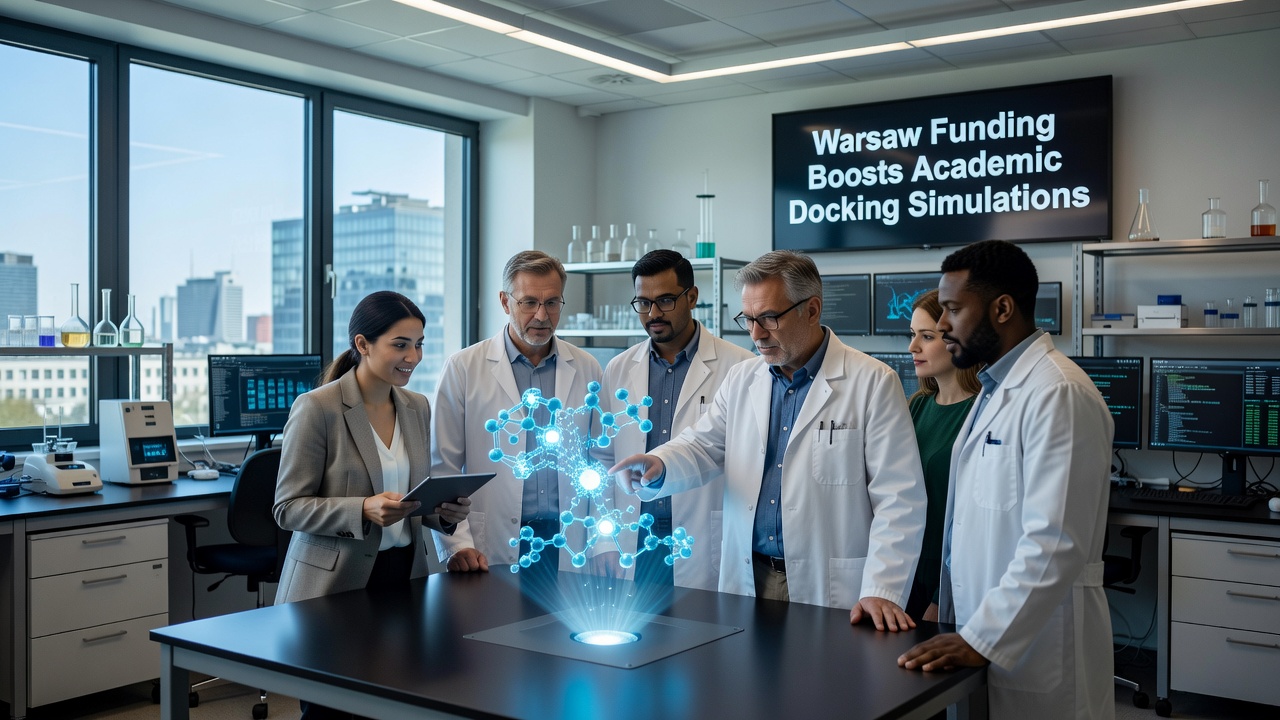
The Beta Docking Research group based in Warsaw has been awarded substantial new funding to expand academic docking simulations. National science agencies approved the grant to strengthen computational infrastructure and collaborative projects focused on molecular modeling. This investment targets improvements in simulation accuracy for beta docking protocols widely used in drug discovery and materials research. Teams will acquire advanced servers and software licenses while recruiting additional postdoctoral fellows and graduate students.
Allocation of Resources and Research Focus
Resources will support upgrades to high-performance computing clusters essential for running large-scale docking experiments. Researchers plan to refine scoring functions and incorporate machine learning models that predict binding affinities more reliably. International partnerships with laboratories in Germany and the Netherlands will enable data sharing and joint validation studies. Workshops will train early-career scientists on best practices for setting up simulations and interpreting results. Emphasis is placed on developing open-source code that the broader community can adopt and extend. Historical contributions from Warsaw include optimized algorithms that reduced computation time by thirty percent in previous benchmarks. The current projects aim to integrate quantum mechanical corrections for higher precision in challenging cases involving flexible ligands.
Long Term Benefits for the Scientific Community
Expected outcomes include peer-reviewed publications in high-impact journals and publicly available tools for virtual screening campaigns. Expanded training programs will build regional expertise and attract visiting researchers from across Europe. Sustainable computing practices will be adopted to lower the energy footprint of intensive calculations. The funding positions Warsaw as a recognized hub for docking studies with potential applications in biotechnology and pharmaceutical development. Long-term goals encompass standardized benchmarks for evaluating new methods and contributions to international consortia advancing computational chemistry standards. Overall the support accelerates progress toward more efficient and accurate simulation workflows that benefit both academic and industrial users.